

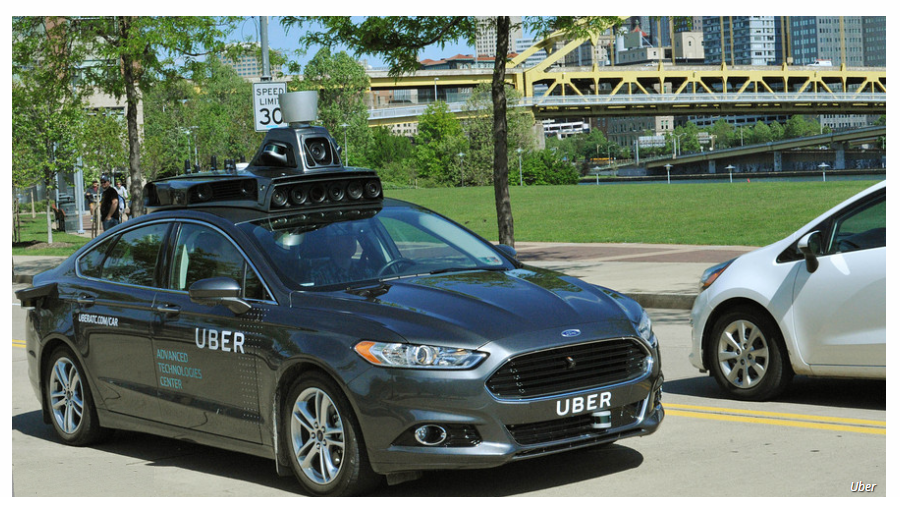
A growing number of consumers forego car ownership thanks to the accessibility of car- and ride-sharing services , Zipcar and car2go.
Around 9% of people who sold or traded in a vehicle over the past year decided to forego getting a new car in favor of using services like Uber and Lyft, a poll conducted by Reuters and Ipsos found last May.
Robert Farrington, founder of personal finance website The College Investor, is one of those people. When the time came for Farrington to replace his car, which was over a decade old and had more than 100,000 miles, he decided to test his hand at going without his own car. Instead, he planned on using Uber or Lyft for the bulk of his transportation needs. His family still owned another car, but he primarily traveled via ride-sharing.
His experiment has proved to be a resounding success: He only spends between $100 and $200 per month on rides with Uber, and he has found that the availability of cars is fairly good even though he lives in the suburbs. “I definitely think it’s a viable option as long as ride sharing is available and low cost,” he said.
The shift away car ownership is even more notable when taking car-sharing services such as Zipcar and car2go into account. While 43% of Zipcar members owned a car prior to joining, only 24% continue to do so after they’ve joined, Zipcar found in a study. It does, of course, have a vested interest in people renting rather than buying automobiles.
Driver’s License Study
Also consider a Driver’s License Study by the University of Michigan’s Transportation Research Institute. The study examined changes in the United States from 1983 to 2014 in the percentage of persons with a driver’s license as a function of age.
Key Findings
- For 16- through 44-year-olds, there was a continuous decrease in the percentage of persons with a driver’s license for the years examined. The percentages for 20- to 24-year-olds in 1983, 2008, 2011, and 2014 were 91.8%, 82.0%, 79.7%, and 76.7%, respectively.
- For 45- through 69-year-olds, there was an increase in the percentage of persons with a driver’s license from 1983 to 2008, followed by a continuous decrease from 2008 to 2014. The percentages for 60- to 64-year-olds in 1983, 2008, 2011, and 2014 were 83.8%, 95.9%, 92.7%, and 92.1%, respectively.
- For those 70 years and older, there was an increase in the percentage of persons with a driver’s license from 1983 to 2008, followed by an increase from 2008 to 2011, and a decrease from 2011 to 2014. The percentages for 1983, 2008, 2011, and 2014 were 55.0%, 78.4%, 79.2%, and 79.0%, respectively.
People delay getting a driver’s license likely as an affordability and college debt issue.
Better Off Without a Car?
Add up the full cost of ownership, including your time, and a quarter of American drivers might be better off using Uber or Lyft than owning a car.
The decision for owning a vehicle or using mobility services is unique to every individual. If you purchase a highly efficient vehicle for less than $25,000 and drive it more than 15,000 miles a year until it falls apart, then you should definitely own a car if your goal is to save money.
But, if you drive less than 10,000 miles a year, face long waits in traffic, or place a high value on your time that would otherwise be spent driving, our calculations show that mobility services might be the cheaper option. Geography can also play a role; it’s not a coincidence that there have historically been so many taxi cabs in New York City, where the high cost of parking and slow pace of traffic consume time and money.
Dramatically Different Future
By 2025, the car industry will look dramatically different than it does today.
Car ownership, electric vehicles, and autonomous vehicles will all be in play.
Mike “Mish” Shedlock






























I have no problem with using these services once in a while when available but I love to drive so will continue to drive even if the self drivers become ubiquitous.
Yeah, one more step towards 3rd world poverty
Nobody will have a car
They’ll propagandize it as progress
Nobody will notice
In 2021, when self-driving cars dominate, individual car ownership will approach zero.
Taxis make a lot of sense in densely populated city centers where parking is limited and expensive — not so much sense in suburbs.
Seems that Uber has a number of hurdles to cross. There will be regulation (and taxation) if Uber replaces city taxis, and there will need to be huge investment by Uber in their own fleet of autonomous vehicles. If Uber aims to meet peak demand, a lot of that fleet will be standing idle much of the day. And if Uber can’t meet peak demand, people will keep their own cars.
In short, the economics are going to change with autonomous Uber vehicles — with a probable big impact on prices.
” …you would think that traffic is getting better.”
No, the Uber the former car owner is riding in is still clogging up the road. Mr. Uber also drives some deadheading trips that create extra traffic. That, and population growth means traffic never gets better.
our private cars handle.
Mish asks: Are you ready? we are not ready yet. too many responsibilities that only
Car predictions for 2025.
Uber bankrupt.
Telsa bankrupt.
Can I get an Uber to load 300lbs of chicken feed in the trunk, then 2 dozen 2x4x16′ on the roof rack ? If not, I’ll keep my pickup truck.
The one thing that people forget is that it would be much easier to put someone under surveillance if they had to call a taxi, uber or liyft everytime they wanted transport. For significant number of people like teens, handicapped, disabled or seniors that have very limited transport needs loss of privacy wont matter and cost savings will be a high priority. Look for MORE driving license confiscations for unpaid tickets, driving infractions such as DWI once alternative transport becomes low cost and convenient.
How about the cost of gas, tolls and parking?
But you had to buy the car first! Then it costs you $0.50/mile to drive, assuming you are average. If you drive a BMW/Mercedes, etc, then the cost per mile is likely higher.
I agree with this. For me going everywhere in Uber would be more expensive monthly then owning a car, and much less convenient. Just one single round trip to the airport on Uber is $130 for me. If I had to use Uber every time I went grocery shopping, to the gym, go see friends, go hiking, go to a sporting event…it would be a very high cost and sometimes I would have to wait 10 min for a car to come. I think for people who live in very urban areas where they can walk to things, take pub trans and just use Uber to supplement that it could work. Suburbs or rural it is more difficult to get rid of the car.
I’ve been tracking the costs for my fleet (I’ve got 4 kids and thus 7 cars at the moment) since 1995 – every gallon of gas, depreciation, car washing, service and repairs, etc. etc. My 1997 Camry is bottomed out at $0.54/mile but is now creeping up to $0.65/mile. My 2002 Sienna hit $0.30/mile but is now at $0.74/mile, my wife’s six month old Fit is $3.75/mile (mostly depreciation driving off the lot). Overall for a combined 21 years of tracking, covering 256,000 miles, the net cost is $0.55/mile. Most people would do better as we have low mileages (average 6,000/car/year) so the fixed overheads plus insurance for 4 18-25 year olds is hairy.
However I don’t calculate in the opportunity cost of the $175,000 I paid for all the cars – but a rough estimate would be $200,000 over a couple of decades (72/7=10, thus 2.1 x $175,000 / 2) which would take it to about $1.40/mile.
@kram You are talking about the technological rate of change. There are a lot of politics involved in the car industry – far more than in the electronics. I used 1900-1913 because I have no other data to base it on. Nor does anyone else.
That’ s only a fair comparison when you compare the overwhelming stench of horsecrap with that of gasoline. You shouldn’t drive your comparisons too far.
Couple of thoughts – If 9% of folks trading in cars haven’t bought a new car, then logically, you would think that traffic is getting better. Not seeing that in my area. I’ve read several stories that Uber and Lyft have made driving around NYC impossible. The sports announcers on the tv tonight were complaining about how bad the traffic is in Atlanta. Anecdotal, but you get the point.
I drive an older German car – my maintenance costs are averaging $1800/year. Insurance is only $500/year. No way am I giving up my car.
Why is Uber not profitable? They don’t own any cars. It’s an app for crying out loud. Something tells me they are pricing their rides at an unprofitable price vs. regular cabs in order to drive them out of business. Once that’s accomplished, they can raise their prices.
Is it more expensive to have your own car? UberX costs $1-$3/mile, all in costs for driving yourself are about $.50/mile for an average car.
My car is steps away and available to take me anywhere, including a 100+ mile trip. I need to wait 5, 10, or more minutes for an Uber to arrive. I doubt many Uber rides are for longer than 25 miles. It’s a nice service but not a car replacement for most people.
I agree, and one key aspect that will govern the rate of adoption of self-driving cars will be the cost of conversion kits – i.e. taking a current car and making it self-driving. I can see the value of a human-driven car dropping as fast as the old tube TVs did when flat panel TVs dropped to about $1,000. If the conversion process costs under $10,000 then a lot of existing cars will be retrofitted and the switch over will happen in less than a decade, but if the conversion cost is prohibitive then it will take regulations or sky high insurance rates to force people out of their trusty Fords and Hondas.
“I definitely think it’s a viable option as long as ride sharing is available and low cost,”
——–
And the cost of pure rides should get even cheaper when cars are autonomous and don’t need to pay a driver to move the car from point A to point B. Further cost reductions should occur because of lower insurance rates and the ability to maximize use of the car over a 24 hour period. As cars of the future will likely be electric driven, the overall maintenance costs of cars should decline as electric engines are much simpler than IC engines. Then there should be significant savings in car advertising that manufacturers will no longer incur. Finally, the cost of manufacturing cars should decline, especially when humans are eliminated from the assembly lines and car design no longer needs to cater to one’s perceived sense of worth or economic status.
All in all, the change to ownerless autonomous cars that are available at your beck and call any time of the day should turn out to be quite deflationary.
Once they eliminate the human drivers, these services will become profitable. This is where they are aiming at.
I’m already there – i live within 2 miles of a train station (MBTA ) and 3 of an Amtrak. We are a family of 4 with 2 cars. Walking, MBTA and Lyft cover 97% of my travel needs on a normal week and 100% when I’m traveling. As soon as my 2 youngest sons move out the 2nd car is gone. There is a plus to all this walking – I get my 10k steps quite regularly.
Sounds like bad news for Germany and Japan.
Damn this miserable interface.
Anyway, the only part of what I quoted that makes sense is the “under 10000 miles/year.” If someone lives an area with long waits in traffic how does that change as a rider in a car? How does riding instead of driving free up so much valuable time? One can do some stuff that would be difficult to do while driving but it isn’t as if total freedom to do anything is gained.
“But, if you drive less than 10,000 miles a year, face long waits in traffic, or place a high value on your time that would otherwise be spent driving, our calculations show that mobility services might be the cheaper option.”
Rate of change back in the early 1900s was glacial compared to current rate. Therefore fitting that model to current time would end up being inappropriate.
That is indeed the transition for most. I am curious about boomers. Many people have difficulty driving at night. Ownership insurance costs and vehicle maintenance costs come into play. There will be dramatic changes by 2025 but it will by no means be complete by then.
I think the calculation will be similar to the chap in the article, where a two car family become a one car + ride share family. I know I’ve bought the last car I’ll ever own – when either it or my wife’s car die, I’ll keep the other one – given that my son is still driving my 1997 Camry with 165K on it, I’m looking at a couple of decades. I’ll bet there are a lot of people in my position.
To be clear, I meant viable for profit entities.
Uber and Lyft are not commercial via entities. They never going to operate at a profitable level. They only reason they are in existence right now is all the cheap money flouting looking for a return. Take away the punch bow and just watch.
It took from 1900 to 1913 for the streets of New York to go from all horse to all car, according to a few articles I have read that include pictures. Based on that, and the fact that there are still no completely driverless cars on the road, I would say that it will take until at least 2031 for driverless cars to replace over 90% of human-driven cars. I do not see all-electric vehicles becoming commonplace.
In 1971 my 1st grade teacher told me the USA would be using metric system in few short years. Maybe in 2050, never in 2025. I will take that bet Mish, how much you wager?